The Eye Over the Vanni
The Eye Over the Vanni
Inside Project Drishti and India’s hidden architecture of Sri Lanka’s final air war
Two Indians were wounded in a night attack on a radar station at Vavuniya. Both governments described them as civilian engineers. Eleven years later, a promotion dispute would reopen the story.
यदि त्विच्छसि सङ्ग्रामे द्रष्टुमेनं विशां पते ।
चक्षुर्ददानि ते हन्त युद्धमेतन्निशामय ॥
If you wish to see the battle, O king,
I shall give you sight. Come—behold the war.
Mahābhārata, Bhīṣmaparvan 2.6
Vavuniya woke in the small hours of 9 September 2008 to the sound of gunfire. It came from the Wanni Security Forces Headquarters and the air force base beside it. Shortly before three, Tamil Tiger commandos wearing fatigues resembling the Sri Lankan Army’s had crossed private land and entered the military complex towards barracks occupied by Special Forces. Vavuniya was a garrison town on the southern edge of Sri Lanka’s northern Vanni region. Within minutes, artillery shells were falling on the base. Then came the bombs. Two light aircraft appeared overhead and dropped their loads.
The raiders had a specific target. Not the runway, and not the fuel. They wanted the radar, an Indian-made set on a low hill. In Iqbal Athas’s reconstruction, published in The Sunday Times five days later, men carrying assault rifles and rocket-propelled grenades pushed towards the set while others detonated their suicide belts. The radar was usually the first to pick up a Tiger aircraft leaving the Vanni. Destroying it could open a route through Sri Lanka’s air defences.
Athas reported that the radar was damaged and replaced, although Sri Lanka’s air force said it was untouched. Two Indians working there were wounded and taken to Colombo for treatment. Both governments described them as civilian maintenance engineers employed by Bharat Electronics, the Indian state-owned company that built the equipment, according to The New Indian Express.
The civilian explanation had been unstable from the day of the attack. Bharat Electronics’ spokesman said he knew of none of its engineers being there. The following day, B. Raman, a retired senior officer of India’s Cabinet Secretariat, wrote that two Indian radar technicians had been wounded. He could not establish whether they were permanently attached to the station or visiting for maintenance.
Eleven years later, a promotion dispute would reopen the story.
The file
One of those men was a serving member of the Indian Air Force. His name was Chintamani Rout. He had been posted to Sri Lanka nineteen months before the attack, under a mission called Project Drishti, and was crew chief of the radar squadron at Vavuniya. A splinter struck the back of his left leg. The Indian Air Force would later recognise him as a battle casualty.
Rout joined the Indian Air Force in May 1989. His case before the Armed Forces Tribunal, the body that hears military service disputes, records his deputation to Sri Lanka from 8 February 2007 to 10 October 2008. It identifies his post as crew chief of No. 2 Air Defence Radar Squadron at the Sri Lanka Air Force base in Vavuniya. At about 3.20 a.m. on 9 September, during an attack from the air and the ground, he suffered the splinter wound.
Rout’s long posting now answers that question for one of them.
The case file was Chintamani Rout v Union of India and Others, Original Application No. 531 of 2019, before the Armed Forces Tribunal, Principal Bench, New Delhi, decided on 21 November 2019.
The injury followed him home. A permanent low medical classification excluded him from promotion to junior warrant officer in successive rounds between 2011–12 and 2018–19. He challenged the bar and asked for his seniority to be restored. He also sought a battle casualty certificate: formal recognition of how he had been wounded.
He sent a legal notice; the Air Force rejected it in a letter dated 18 February 2019. That year he filed his application before the Principal Bench of the Armed Forces Tribunal in New Delhi, asking for three things: the rejection quashed, the medical bar on his promotion waived with his seniority restored alongside his batchmates, and a formal battle casualty certificate for his wound.
By the time the tribunal decided his case on 21 November 2019, the government had supplied that certificate. It was dated 31 July and signed at Air Headquarters. The Air Force continued to resist his promotion claim, but his military status and Sri Lankan posting were admitted facts. The opening sentence of the judgment names Drishti.
The case came up before a division bench: Justice Rajendra Menon, a former Chief Justice of the Delhi High Court who had taken charge as the tribunal’s chairperson only a fortnight earlier, sitting with the administrative member B.B.P. Sinha. The advocate V.S. Kadian argued for Rout, V.S. Tomar for the government.
The state still fought the claim, down to arguing that Rout had waited too long to bring it, an objection the bench threw out.
The tribunal did not order his promotion. It left him a route to seek a ministerial decision, preferably within six months of his representation. Later records suggest that he did advance. Two unauthenticated promotion-panel copies posted on Scribd carry his name and a service number matching the tribunal’s official cause list. The 2025–26 copy lists him for sergeant-to-junior-warrant-officer promotion; the 2026–27 copy lists him for junior-warrant-officer-to-warrant-officer promotion. If genuine and correctly compiled, the later entry indicates that he had reached junior warrant officer. His individual promotion order, effective date and any restoration of seniority remain unestablished.
His service record matters because India’s contribution reached into the conduct of that war. Its radars and personnel helped Sri Lanka detect the aircraft that threatened military bases, the international airport and the capital’s power supplies. The assistance strengthened the defences of a state whose final offensive, ending in May 2009, would subject Tamil civilians to mass killing. A United Nations investigation later documented repeated shelling of hospitals and areas where civilians had been told to seek safety. For Tamil citizens in India demanding that Delhi stop supporting Colombo, the difference between a manufacturer servicing equipment and Indian airmen working inside an operational squadron was a question of their own government’s participation.
Project Drishti, Sanskrit for sight, gave India a military presence at the radar screens.
Two dry service terms carry the weight in all this. Rout was not a repairman flown in for a short visit; the judgment records a long deputation as crew chief of the squadron. A battle casualty is a man wounded in operations, not in an accident on a servicing contract. Put those beside the 2008 story of civilian technicians and the story does not survive.
Athas printed the wounded men’s names as A.K. Thakur and Chinthamani Rant, apparently a misspelling of Rout. Raman also cited a website he identified as run by Sri Lankan naval intelligence, which described two Indian nationals operating the radar. On 21 September, Athas reported the appointment of a court of inquiry, headed by the Vavuniya base commander, Group Captain Romesh Fernando. Its findings have not been located.
Tamil Guardian’s contemporary report, citing TamilNet and other press accounts, described the radar as Indian-supplied and manned, and called the wounded men its operators. Those were contemporary claims, not independent confirmation of both men’s military identities. In the civilian account, one word was missing: uniform.
The question also reached India’s Parliament. On 21 October, C. Krishnan, the MP for Pollachi in Tamil Nadu, urged the government to take back the radars it had supplied to Sri Lanka, “along with the experts who have been deputed to operate the radars”. Krishnan belonged to the MDMK, a Tamil nationalist party. His demand distinguished the equipment from the men sent to work it. The tribunal would later record just such a deputation.
“How can we advise them?”
The following day, a senior Ministry of External Affairs officer was asked whether Indian military advisers were helping the Sri Lankan Army. “How can we advise them?” he replied. Asked about civilian Tamil deaths, he said that “in war some damage was expected”.
By January 2009, Rout was back in India. When a fresh report alleged that four Indian military experts had been wounded in the Vanni, an Indian High Commission official denied it, saying there were no Indian military personnel there. The public insistence on distance continued as the war approached its bloodiest months.
Indian military assistance was already being reported. In May 2007, Athas had described the arrival of an Indian Air Force team aboard a special aircraft, alongside another radar delivery. But when two Indians were wounded at an operational base, the account attributed to both governments turned them into company employees. The concealment lay in that false description of a serving airman.
Before the first bombs
India began supplying the radar network before the Tigers’ air wing, known as the Sky Tigers, flew its first combat raid. In early 2005, reports emerged that the Liberation Tigers of Tamil Eelam, the separatist movement fighting for a Tamil state in Sri Lanka’s north and east, had acquired Czech-built Zlin light aircraft. They had reportedly been dismantled, shipped to the Mullaitivu coast and reassembled in the Vanni. Small civilian aeroplanes, fitted with improvised bomb racks, gave the movement a means of striking far beyond its front lines.
The discovery reached the top of the Indian government. A US diplomatic cable of 13 June 2005 records Manmohan Singh discussing the Tigers’ air capability with President Chandrika Kumaratunga during her visit to Delhi earlier that month and offering assistance to upgrade Sri Lanka’s air force. Foreign Minister Natwar Singh repeated the offer in Colombo the following week.
A proposed defence cooperation agreement was politically harder to deliver. The same cable records opposition from the MDMK and the PMK, pro-Tamil parties in India’s governing coalition, as Tamil Nadu approached a state election. Vaiko, the MDMK leader, met the prime minister on 5 June to oppose the agreement. Delhi stalled the treaty while continuing to provide military supplies, training, intelligence and naval cooperation. The public agreement could be delayed without stopping the work it was meant to formalise.
India supplied its first two radar sets in December 2005, before Mahinda Rajapaksa’s first visit to Delhi as president. Sri Lanka’s air force dates the formation of the Vavuniya radar squadron to 10 March 2006. Rout joined it the following February. When the Zlins bombed Katunayake on 26 March 2007, Indian equipment was already in place and an Indian airman was already serving with the squadron.
The Hindu’s report contained two details that matter here. The radars were dispatched ‘on behalf of the Indian Air Force’ from a military base outside Delhi, and that base was the one from which helicopters had once flown, via Thanjavur, to lift Velupillai Prabhakaran out of the army’s Vadamarachchi encirclement in 1987. The paper also recorded Delhi’s motive: India supplied the radars because it did not want Chinese or Pakistani surveillance equipment installed within sight of its own coast.
India had reasons of its own to watch the sky over the island. The June 2005 cable relayed press reports about the aircraft’s possible reach into southern India and an alert at Cochin airport. Years later, Shivshankar Menon, foreign secretary during the final campaign, described India’s objectives: limiting separatism that could spread to Tamil Nadu and keeping hostile powers from gaining influence in Sri Lanka. Supporting Sri Lanka’s territorial unity was a settled Indian policy.
The Center for Naval Analyses study puts seventy million Tamils across the Palk Strait in Tamil Nadu, and an armed non-state air force operating that close to the Indian coast was a problem Delhi wanted gone for reasons of its own.
An aircraft was a particularly visible expression of the Tigers’ challenge to that unity. The movement already held territory, administered courts, collected taxes and operated naval forces. Now it could fly over the capital of the state it was fighting. In April 2007, its spokesman Rasaiah Ilanthirayan invoked the air wing when he declared, “we are a state!” A handful of aeroplanes gave a much larger political claim a form that Colombo could neither ignore nor reliably stop.
India’s military records also show concern for its own southern approaches. Air Marshal Yashwant Rao Rane commanded Southern Air Command from February 2007 until March 2008. His Param Vishisht Seva Medal citation credits him with integrating civilian and military radars over the southern peninsula and coordinating air-defence sensors to cover Sri Lankan and coastal airspace against anticipated threats. Watching Sri Lanka’s sky was part of defending India’s.
Colombo, meanwhile, sought help beyond India. After the first Tiger raid in March 2007, Gotabaya Rajapaksa told the American ambassador that Vavuniya had detected an unidentified aircraft but Sri Lanka’s existing defences were inadequate. In a US cable later reproduced by The Sunday Times, he asked for American assistance alongside the Indian equipment and a Chinese radar then being installed. Sri Lanka was assembling its defences from several suppliers, with India already occupying a central position.
Gokhale, drawing on Jane’s, identified the Chinese purchase as a five-million-dollar JY-11 three-dimensional radar. No official document cited here confirms the type.
| Date | What the record establishes | Record |
|---|---|---|
| December 2005 | India supplies its first two radar sets to Sri Lanka. | Indian foreign-relations record |
| 10 March 2006 | The Vavuniya air-defence radar squadron is formed. | Sri Lanka Air Force history |
| 8 February 2007 | Rout’s deputation to Sri Lanka begins. | Armed Forces Tribunal judgment |
| 26 March 2007 | The Sky Tigers bomb Katunayake in their first combat air raid. | Contemporary reporting |
Finding the Sky Tigers
A radar works by sending out radio pulses and listening for the echoes that bounce back from objects in the sky. The return time tells the operator how far away an aircraft is; the direction of the antenna tells them where to look. Successive readings show its movement.
Low flight makes that job harder. A hill can hide an aircraft, just as it hides a vehicle from a lookout. Over longer distances, the earth’s curvature puts low aircraft below the radar’s line of sight. A crew may therefore detect a raider only after it has come dangerously close. Additional radars placed along its likely route give the defenders more chances to find it earlier.
The Indian set, the INDRA-II, was built for low-flying targets. It was a two-dimensional radar: it measured an aircraft’s distance and direction, but not its height. A three-dimensional radar adds altitude. Terrain, flight height and the strength of the aircraft’s echo affect detection by both kinds of radar.
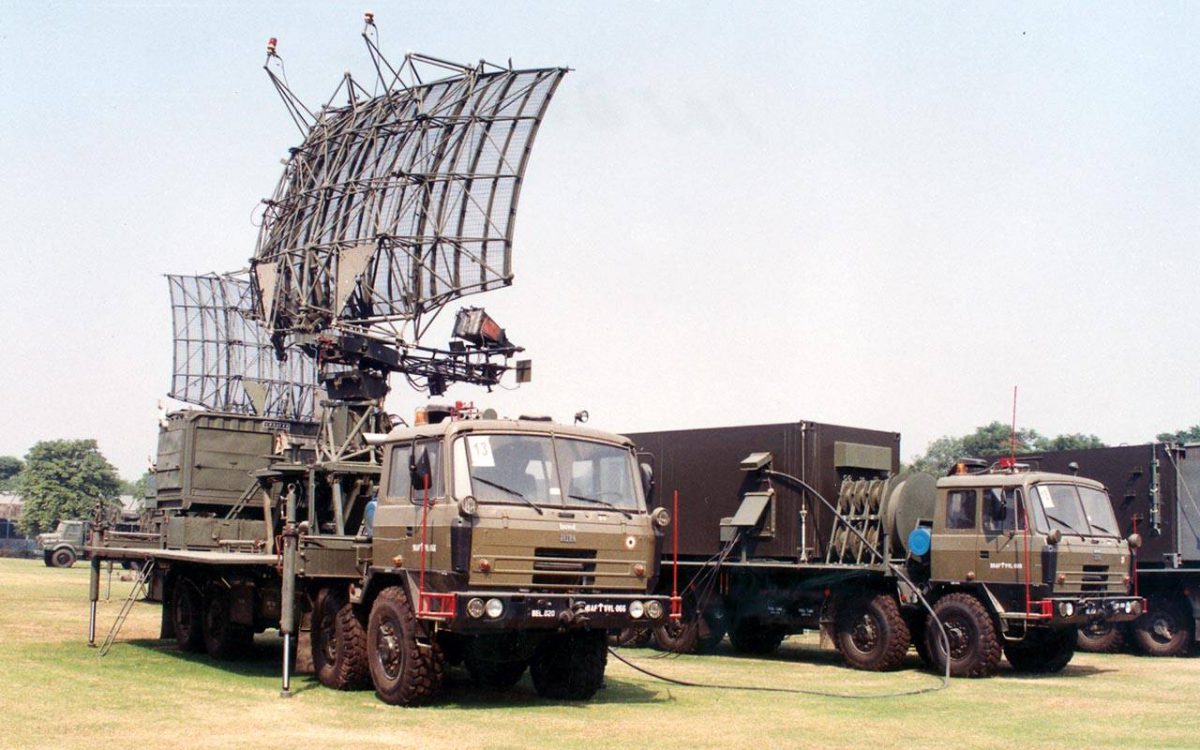
Sri Lanka needed that warning early enough to send fighters from Katunayake and alert gun crews along the approach. A radar did not have to fire a shot to contribute to an interception. It gave the defenders time and a position on which to act. The aircraft it found could then be engaged by another part of the system.
The Zlins had shown what happened when that system failed. The first Katunayake raid killed three airmen and wounded sixteen, closed the international airport for several hours and shook the Colombo stock market. During a raid on oil and gas installations on 29 April 2007, the capital lost power, the airport shut and thousands of cricket spectators watching Sri Lanka in the World Cup final fled through the blackout. The bombs caused limited damage; the disruption reached well beyond the blast sites.
The Sky Tigers made the government decide which lights to extinguish, which flights to divert and which installations to guard. Their effects spread through the response: an aircraft could interrupt an international airport even when its bombs missed valuable targets. Each successful return left the government facing the possibility of another raid. A state with fast jets could destroy much more than the Tigers could, yet still fail to prevent those public demonstrations of its vulnerability.
In a comparative study of insurgent aviation, US Air Force officer John Bunnell argued that a small air wing could impose costs on the defender: investment in warning and interception, and resources committed to protecting installations far from the ground war. A Sri Lankan air force officer interviewed for a West Point study later described the air wing’s value as principally psychological.
Aircraft also tied the insurgents to the ground. They needed airstrips, fuel, repairs, trained crews and supplies to replace what wore out. In Looking Up, a study of insurgent airpower, Ryan Olish and William Morgan identify secure bases and the capacity to sustain operations as essential conditions. Their framework exposes a tension in the Tigers’ project: the territory that allowed an air wing to develop contained assets the movement now had to protect.
At Vavuniya, that contest ran in both directions. The government could threaten the Tigers’ aircraft on the ground; the Tigers could attack the equipment that warned of their flights. In September 2008 they sent commandos, artillery and aircraft against a radar position that watched their departure routes. Rout’s posting placed him at a site the movement considered important enough to attack with all three.
Sri Lanka’s air force claimed that a Chinese-supplied F-7G interceptor shot down one of the Zlins on its return from that raid. The Tigers said both aircraft came home. Athas reported the pilot’s account of a missile launch and a ball of fire, but also the air force’s admission that it had no photographs of the interception or wreckage. The September shootdown remains a contested claim.
Seven weeks later, a further raid demonstrated both the reach and the weaknesses of the radar network. Shortly after ten on the night of 28 October, two Tiger aircraft crossed the Vanni. One bombed the army headquarters at Thallady in Mannar and returned. The other flew south towards Colombo.
In Athas’s account, the Indian radar at Vavuniya found the southbound aircraft near the west coast. Another Indian set at Palavi picked it up over Puttalam. By 11.23 p.m., the Chinese radar at Mirigama and the Indian set at Katunayake were tracking it. Calls to offices across Colombo counted down its distance from the airport. The airport closed, incoming flights diverted to Chennai and the capital went dark.
Then the aircraft disappeared from the screens. It had dropped to treetop height and, for more than ten minutes, evaded the radars watching its approach to Colombo. At 11.46 p.m., it bombed the Kelanitissa power station. According to Athas, one pursuing F-7 had to abort its first take-off after its canopy broke loose; another located the Zlin but failed to obtain a missile lock. The raider returned to the Vanni.
The final raid came on 20 February 2009, as the Tigers were losing the ground around their remaining airstrips. Two aircraft took off from the Puthukkudiyirippu area. Contemporary reporting describes their detection first at Vavuniya and then at Palavi, followed by a blackout and defensive action. Both came down under anti-aircraft fire, one crashing into Colombo’s Inland Revenue building. The military said they had been packed with explosives for suicide attacks. Two civilians died, including a child reportedly struck by a stray bullet from the defensive fire, and dozens were injured. The radar position the Tigers had tried to destroy five months earlier had helped give warning of their last sortie.
The air wing’s dependence on territory helps explain its vulnerability as the army advanced. It does not explain the Tigers’ defeat by itself. In Size Still Matters, Sameer Lalwani challenges the argument that their turn towards conventional warfare accounts for the outcome. They had long combined regular formations with guerrilla attacks and suicide operations, and continued to do so. He places greater weight on the Sri Lankan state’s expansion of its own forces. Aircraft added reach and obligations within a much larger contest over resources and endurance.
| Effect | What the Sky Tigers demonstrated | The constraint |
|---|---|---|
| Reach | Attacks on the capital and installations beyond the northern front | Penetration did not amount to control of the sky. |
| Disruption | Blackouts, airport closures and repeated defensive mobilisation | Disruption did not halt the government’s ground offensive. |
| Political visibility | An air wing publicly invoked as evidence of statehood | Displaying statehood did not secure diplomatic recognition. |
Air defence was intended to protect the bases and equipment with which Colombo fought that wider war. Military doctrine calls this defensive counterair: detecting and defeating aerial attacks to preserve forces, equipment and infrastructure. In Sri Lanka, the installations under threat included the bases from which government aircraft flew against the Tigers. Protecting them could preserve offensive capacity. Sri Lanka’s air force describes the work of its INDRA-equipped squadron at Palavi as surveillance, early warning and control of interceptors. Ahmed Hashim’s military history, When Counterinsurgency Wins, describes the increased integration of air support with the final ground campaign.
The INDRA helped detect incoming aircraft and make a defensive response possible. Its value to the wider offensive lay in the protection the system was meant to provide, even as the raids exposed gaps between finding an aircraft and stopping it.
Rout’s posting documents Indian participation in that work. The records do not show how his crew’s work related to particular attacks in the Vanni.
More than one posting
Rout’s case supplies the name and dates of one man’s deployment. Published service citations show the organisation behind India’s wider air-defence effort.
A decoration citation for Vinod Kumar Singh Yadav, later an air commodore, credits him with bringing the INDRA radars into service and places him in the Core Advisory Group for Project Drishti. Another citation names Jagadeesh Bhikaji Rane as chief operations officer of the Indian Air Force contingent in Sri Lanka and an adviser on the island’s air defences. He is a different officer from Yashwant Rao Rane, the Southern Air Command chief.
Two veterans have described their own roles publicly. Ashish Rajput writes that he set up the mission’s Admin and Operations Centre in Sri Lanka. Manoj Gupta records an appreciation handed to him in January 2007 by the ‘Contingent Commander, Project Drishti’. His personal account places a contingent commander there before Rout’s deputation even began. These are personal accounts, rather than official posting orders.
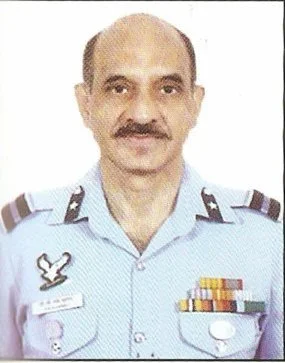
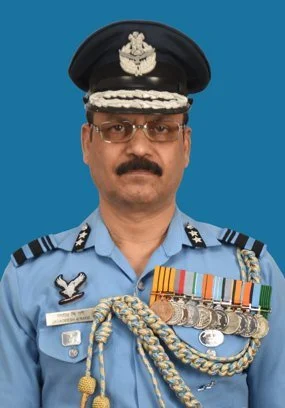
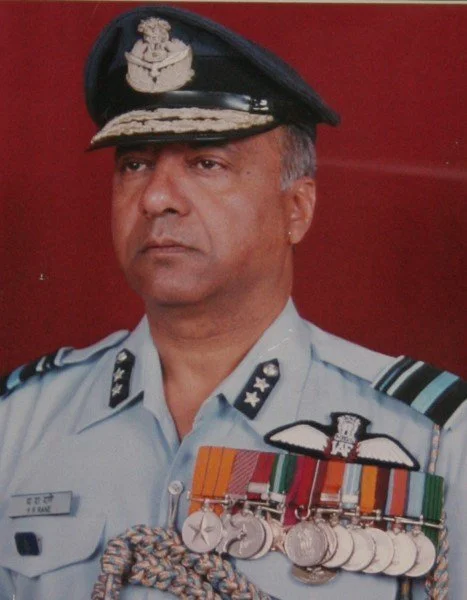
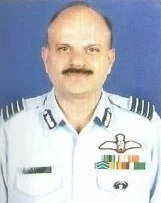
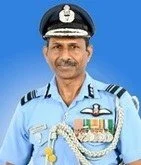
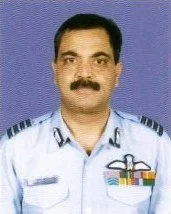
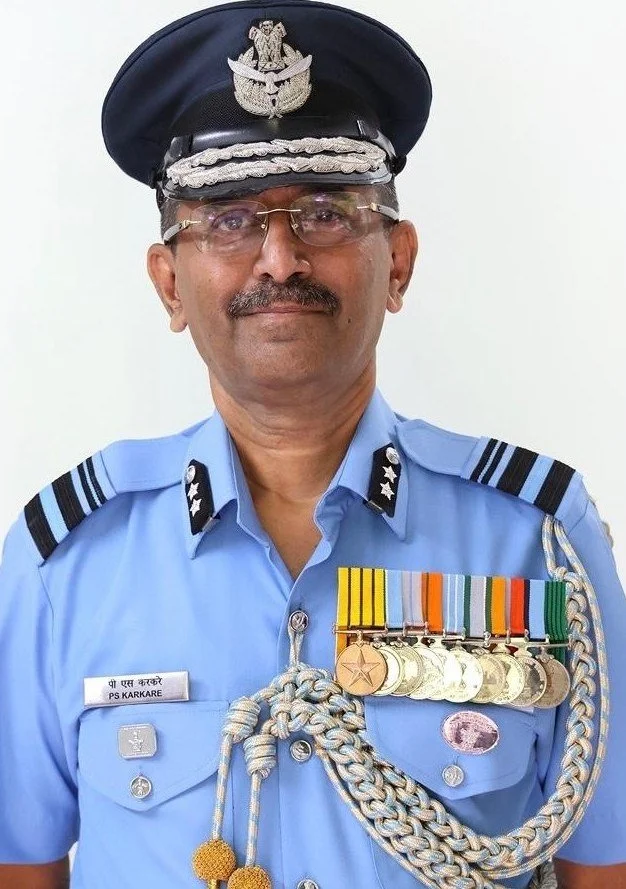
These records put senior Indian officers into the same air-defence effort that placed Rout at Vavuniya. Yadav’s citation names Drishti’s advisory group; Rane’s describes the contingent’s senior operational appointment; Rout’s judgment places its claimant inside a Sri Lankan squadron. The service honours recognise professional military work that the description “civilian engineers” concealed when the casualties became public.
The Sri Lanka Air Force recorded an Indian contingent’s presence again after the war. At Palavi’s fourth anniversary celebrations in May 2011, officers and servicemen of the IAF contingent joined the squadron’s events. The notice records their participation two years after the fighting ended.
The page establishes their presence then, not an unbroken posting from the war. The page never uses the word Drishti, so whether this was the same mission or a successor cannot be said. That the men were there in May 2011 can.
India also supplied weapons and sent personnel to help establish their use. In January 2021, the Indian High Commission in Colombo stated that India had gifted an Igla shoulder-fired anti-aircraft missile system to Sri Lanka in 2007. An Indian Air Force training team had helped establish the system and trained Sri Lankan personnel to use it. India also paid for the missiles’ annual inspection and servicing.
An Igla is defensive in purpose and lethal in use. It destroys aircraft. The release records Indian assistance with both the means of detecting an aerial threat and a weapon for attacking it. “Non-lethal assistance”, a description repeatedly used for India’s wartime support, cannot account for the whole of that contribution.
In its UN arms-register return for 2005, India also declared the export of six L-70 anti-aircraft guns to Sri Lanka. A radar warning becomes more valuable when the defenders have suitable weapons and trained crews to act on it. India’s support extended across those functions.
The 2011 date in later Indian statements about the radar gifts can obscure the wartime sequence. Equipment had been supplied years earlier. Reports in December 2010 described the sets as being on a temporary basis before their conversion into gifts; the High Commission later dated the gift of four INDRA sets to 2011. A postwar transfer of ownership did not make the equipment’s arrival postwar.
The bargain with Delhi
Air defence formed part of a larger relationship that Sri Lanka’s leaders managed closely. Menon names the six officials who handled it: Basil and Gotabaya Rajapaksa and presidential secretary Lalith Weeratunga for Sri Lanka; national security adviser M.K. Narayanan, defence secretary Vijay Singh and Menon himself for India. He recalls repeated trips to Colombo in the first five months of 2009, with military briefings and political discussions continuing past midnight.
The Sri Lankan three came to Delhi at least five times between 2007 and 2009, and the Indians made three trips back, mostly without publicity. The exception was June 2008, when the Indian trio landed in Colombo in an air force plane, nearly unannounced, while the army was clearing the Mannar coast, and stayed to arrange Indian warships, anti-aircraft guns and helicopters around the city for the SAARC summit that August. Narayanan had already told Colombo publicly, in 2007, that India was the big power of the region and that Sri Lanka should stop shopping for weapons in Beijing and Islamabad; army commander Sarath Fonseka later gave Gokhale the reply on the record, that Colombo had gone to China’s five-year credit line only because India refused to sell offensive weapons.
Those channels mattered because the war was fought with foreign equipment and outside assistance. In Sri Lanka: From War to Peace, published in 2009, the Indian defence journalist Nitin Gokhale reports that India quietly supplied Mi-17 helicopters on condition that they fly in Sri Lankan colours. A US diplomatic account of the March 2007 raid separately identifies Indian-loaned Mi-17s among the damaged aircraft at Katunayake. A 2009 service citation credits Wing Commander Sameer Mehra with overseeing conversion training for three Sri Lankan pilots on the MiG-27 ground-attack aircraft.
The sequence Gokhale reconstructs begins in December 2005, when Rajapaksa made Delhi his first foreign stop within a month of taking office. His brothers Basil and Gotabaya followed with a shopping list that included air defence weapons, artillery, Nishant surveillance drones and laser designators for precision bombs. Delhi, in his telling, said neither yes nor no. He dates the delivery of five Mi-17 helicopters to early 2006 and describes their wartime work pulling the army’s deep penetration teams out of trouble behind Tiger lines. An offshore patrol vessel from the Indian Coast Guard had already gone south in 2002.
At sea, Indian reconnaissance helped Sri Lanka attack the supply system on which Tiger forces depended. The movement kept cargo vessels far offshore as floating stores of arms and ammunition. Finding those ships enabled the navy to carry the war beyond the island’s coastal waters.
A Sri Lankan naval officer interviewed for Justin Smith’s Naval Postgraduate School research described boarding an Indian Navy Dornier in Colombo in 2006 and flying south on a reconnaissance mission that located an unidentified ship. Gokhale reports Indian Dorniers operating from Ramanathapuram, on the Tamil Nadu coast, and passing intelligence to the Sri Lankan Navy. Smith’s account also identifies Sri Lankan intelligence and reconnaissance and American signals and imagery intelligence as parts of the effort against the supply ships. Menon, writing as a participant in India’s policy, credits intelligence and interdiction by Sri Lanka and the Indian Navy with starving the Tigers of supplies. His account places that cooperation at the opening of his explanation of the war’s end.
The largest Indian contribution may have been at sea. On the Sri Lankan navy chief’s inventory, the ships’ cargo included artillery, mortars, armoured vehicles and the dismantled parts of three aircraft. The Sri Lankan navy sank the first warehouse ship in September 2006, three more in early 2007, and then, in September and October 2007, sailed some sixteen hundred nautical miles to hunt down four ships near Indonesian and Australian waters.
‘We went near Australian waters and whacked the last four vessels,’ Vice Admiral Wasantha Karannagoda told Jane’s Navy International in March 2009, putting his tally for a single year at eight warehouses and more than ten thousand tonnes of war material.
In that interview he did not mention India once. Gokhale, whose naval sources on both sides confirmed the Indian tip-offs, writes that the omission was deliberate: Tamil Nadu was in the middle of an election campaign, and public credit to India for sinking the Tigers’ supply line would have set the state alight.
India helped Sri Lanka find the Tigers’ supply ships and detect the aircraft threatening its bases and cities. That made Delhi an important military partner, with a political problem at home. India’s governing coalition depended on parties in Tamil Nadu, where Sri Lankan Tamils’ suffering was a domestic issue. A government helping Colombo prosecute the war also had to answer citizens demanding that it stop.
Gokhale describes the management of that tension directly. On a quiet visit to Colombo, he reports, Indian officials asked Rajapaksa to conclude the war before India’s general election, due by the summer of 2009. Rajapaksa would not promise a date, but agreed to accelerate operations.
A participant’s account records electoral pressure producing a different request. Weeratunga recalls that, on 24 April 2009, Narayanan asked Rajapaksa to stop military activity ahead of voting in Tamil Nadu. Rajapaksa resisted, he writes, and offered an assurance that heavy artillery was not being used, to be confirmed by the National Security Council. The accounts need not concern the same meeting. Together they show why Delhi’s electoral interest cannot be reduced to a single demand for a faster offensive. What the assurances secured for civilians is a separate question.
“We did not want Indian bullets used against Tamils.”
A Norwegian-commissioned evaluation of the peace process, published in 2011, describes India supplying intelligence and radar surveillance while withholding offensive weapons and worrying about losing influence to China. One senior Indian diplomat told its researchers: “We did not want Indian bullets used against Tamils.” Radar assistance could be presented as a politically more acceptable form of support, even as it strengthened the military fighting them. Menon gives the strategic calculation behind continued engagement: standing aside or asking Rajapaksa to stop, he argues, would have surrendered India’s influence to other powers. Access to Colombo mattered both as a means of influencing the campaign and as an interest Delhi was unwilling to give up.
Across the strait
The political cost of acknowledging that role had deep roots. India had armed and trained Tamil militant groups in the 1980s, then sent the Indian Peace Keeping Force to Sri Lanka under the 1987 accord. Indian soldiers soon found themselves fighting the LTTE. More than a thousand died before the force withdrew in 1990. The following year, an LTTE suicide bomber assassinated Rajiv Gandhi at an election rally in Tamil Nadu.
This was the third time India had put its hand into the war, and the second time it had changed sides. Project Drishti completed the sequence. In the space of a quarter century India armed the Tigers, fought them, and finally helped destroy them, telling its own public as little as it could manage at every stage.
By the final war, Delhi was helping defeat the movement it had once supported. Tamil Nadu’s parties faced demands to protect the Tamil population of the Vanni. In October 2008, five weeks after the Vavuniya attack, DMK parliamentarians threatened to resign unless Delhi secured a ceasefire. Their party belonged to Manmohan Singh’s coalition. A US consular cable, relaying media accounts, records Tamil Nadu’s chief minister and DMK leader, Karunanidhi, withdrawing the threat on 26 October and publicly declaring agreement with the Union government’s Sri Lanka policy the following day. His accommodation with Delhi was not wholly private.
Menon recalls private meetings with senior politicians from both the DMK and the AIADMK, and claims agreement on the essentials of India’s policy. The passage appears in his discussion of opposition to preserving the LTTE leadership. He does not name the politicians or date the meetings.
“If India’s war is really a justifiable one, they can wage it openly… Why should they do it stealthily?”
On 27 January 2009, Pranab Mukherjee had been in Colombo, pressing Rajapaksa for a pause that would let civilians escape the fighting.
On 29 January 2009, a young Tamil journalist named Muthukumar died after setting himself alight outside Shastri Bhavan, the central government’s office complex in Chennai. He had distributed a letter accusing Delhi of complicity in the war. In the translation of his letter published by TamilNet, he accused India of helping a genocide and demanded the withdrawal of Indian troops and an end to satellite and radar assistance. His question was direct: “If India’s war is really a justifiable one, they can wage it openly... Why should they do it stealthily?”
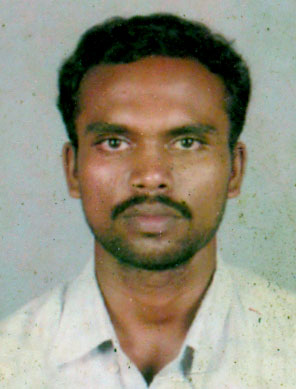
His letter called on the young to act. Kovai Ramakrishnan remembered Muthukumar’s death as a turning point that brought thousands of students into the streets. The South First’s interviews also record student demonstrations across Tamil Nadu and protests by lawyers at the Madras High Court.
His death also began a wave. In Thirumurugan Gandhi’s retrospective movement count, reported by The South First, nineteen people in Tamil Nadu died the same way over the next three months. Gandhi named Ravi of Pallapatti, who died on 2 February, Amareesan of north Chennai on the fourth, Ravichandran of Sirkazhi on the sixth, and Anand of Cuddalore on 17 March. He also recalled that the protest reached beyond India: Murugathasan Varnakulasingham set himself alight outside the United Nations Human Rights Council in Geneva on 12 February, and Joseph Stephen did the same in Malaysia. While the Air Tigers were being finished off under the eye of the Indian radar net, people across the strait were dying by fire in the attempt to stop the war it served.
Radar assistance was already part of the argument on the streets. Muthukumar’s accusation was political testimony to the anger the war had generated; Rout’s service record would later document the military posting behind one part of that anger.
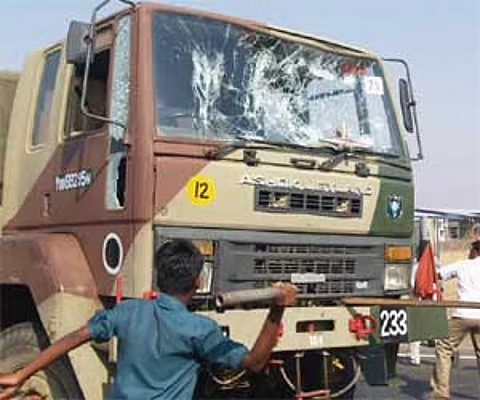
The movement also reached, at least once, for what it believed was a military supply line. On the afternoon of 2 May 2009, sixteen days before the end at Mullivaikkal, an Indian Army convoy moving through western Tamil Nadu ran into protests at Erode, and word travelled down the highway ahead of it. Cadres of the Periyar Dravidar Kazhagam, a Periyarist Tamil nationalist party, were waiting at Neelambur outside Coimbatore when the trucks arrived a little before four o’clock. TamilNet reported that they stoned the convoy, damaged five vehicles and pulled cargo from one of them; among the packed boxes, it said, was a case of mortar shells. Troops broke up the crowd with a baton charge, and five men were arrested, among them Kovai Ramakrishnan, named in the same report as the party’s general secretary.
The state’s additional director general of police insisted the convoy was returning to Madukkarai after training in Secunderabad and warned of stern action against false propaganda, but ammunition in a truck did not establish a destination in Sri Lanka. Ramakrishnan, who went to jail over the incident, has told the story ever since; in his telling, around three hundred cadres blocked eighty-two trucks carrying arms from Andhra Pradesh towards Kochi port and a ship for Colombo.
UN investigators documented government shelling of densely populated no-fire zones. The evidence contradicted Colombo’s account of a humanitarian rescue.
Menon says Delhi sought safe passage for civilians and restrictions on fighter jets and heavy weapons around them, and credits the Rajapaksas with implementing commitments made to India. His account nevertheless records failures of protection: a broken no-firing undertaking in the first safe zone and continued air attacks inside a second.
Protecting people in Colombo from aerial attack was a defensible purpose. So was seeking influence over a neighbour whose war endangered civilians. Neither purpose settled the terms on which assistance should continue. Writing in May 2009, the philosophers Avishai Margalit and Michael Walzer argued that civilian protection required an active intention to spare people, expressed in the choices combatants made. An enemy’s disregard for civilians did not remove that obligation.
For a supporting government, the corresponding question is what it did when its partner broke assurances. Withdrawal might have forfeited influence; it cannot simply be assumed that it would have saved lives. Continued access to Colombo was not, in itself, evidence that civilians were being protected. The defence of engagement depends on what officials could reasonably expect it to achieve, whether they made assistance conditional on restraint and what changed when assurances failed.
By then, warnings of civilian suffering were public. On 13 March, UN human rights chief Navi Pillay had called on both sides to suspend hostilities so civilians could be evacuated. Karunanidhi began a fast on 27 April and ended it the same day, saying Colombo had announced the war had ended. The announcement declared combat operations concluded and promised restrictions on heavy guns and aircraft. UN investigators later found that shelling continued. The assurance had not delivered the protection his protest demanded.
The street meant it. The establishment, tied into Delhi’s coalition, could offer gestures.
Michael Sandel argues that we can owe things to communities whose histories shape us, even without choosing the relationship. Such loyalties must still be judged by the ends they serve. For the DMK leadership, the case for an additional moral obligation rests on a combination: the Tamil solidarity it publicly claimed, its commitments to civilian protection and its position inside Delhi’s governing coalition. That did not require defending the LTTE or ranking civilian lives by ethnicity. It required taking those commitments seriously when assurances failed. Remaining in the coalition could be defended as preserving influence; that defence had to answer what the party pressed for, what it sought to verify and what it told the public when protection failed.
Tamil Nadu voted on 13 May 2009. The count came on the 16th and gave the DMK–Congress front twenty-seven of the state’s thirty-nine seats. Mullivaikkal fell two days after the counting. The dates are the dates; they do not prove that the assault was timed to the count. Acknowledged Indian airmen would have carried a political cost. How far that would have changed votes cannot be read from the result. The Tigers, after all, knew exactly where the Indian radar stood; they attacked it. The secrecy did not keep the radar’s position from them. Its political audience, in this reading, lay across the water, among the people in whose name the streets were burning.
India could acknowledge military personnel in Sri Lanka when their role supported a different public account. In March 2009, it announced the arrival of a sixty-two-member medical team and a field hospital to treat people evacuated from the fighting. The medical mission was presented openly as assistance to the war’s victims. The wounded men from the radar station had been presented as civilians.
The distinction mattered to public scrutiny. Citizens did not need a radar’s wartime coordinates to assess the deployment. They needed to know that their government had sent an airman to help run it.
What the record demands
The judgment preserved the military identity that the civilian account had erased. It also gave a name and a wound to a form of participation easily lost in lists of equipment transfers. Radar crews find the aircraft and enable a response. India helped provide that watch while Sri Lanka fought to eliminate the Tigers, and an Indian airman was wounded at a radar position the movement tried to destroy.
For Tamil citizens of India demanding an end to Delhi’s support, his presence was a fact by which to judge their government. In 2008 the public was told a civilian engineer had been hurt. In 2019 the Air Force certified him as a battle casualty. Between those descriptions lies a decision India’s citizens are entitled to have explained: why their government described a man it had sent to serve in another country’s war as a civilian.
Read in that light, deniability looks like the design. No founding order has surfaced to settle the question. To acknowledge the mission was to acknowledge Indian airmen serving in a Sinhala-majority state’s war on a Tamil insurgency, a short flight from the Tamil heartland of India’s own south, and every death in Chennai and every stoned truck at Neelambur raised the price of saying so. The radar’s job was to see everything over the Vanni. The mission’s job was to be seen by no one.
The record
The hardware
Equipment notes
Nine systems named in the reporting, with their published specifications.
Watching the sky · IndiaINDRA-II low-flying detection radarTwo-dimensional air-surveillance radar: it measures an aircraft's range and bearing, not its height
Bharat Electronics Ltd, Bengaluru; developed by DRDO's Electronics and Radar Development Establishment
| Type | Two-dimensional air-surveillance radar: it measures an aircraft's range and bearing, not its height |
|---|---|
| Band | L-band |
| Detection range | About 90 km against a fighter-sized aircraft (reference data; the maker publishes no figure) |
| Tracking | Track-while-scan, up to 200 targets; integral IFF interrogator |
| Antenna | Mechanically rotating reflector, about 16 turns a minute (reference data) |
| Vehicles | Three: antenna, transmitter cabin and display cabin |
| Deployment | About 60 minutes |
The set at Vavuniya, where Rout was crew chief of No. 2 Air Defence Radar Squadron, and the sets at Palavi and Katunayake. The Vavuniya set was damaged on 9 September 2008 and replaced, Athas reported — with a set moved from Katunayake, according to his 14 September column. India formally gifted four INDRA Mk-II sets in 2011; its High Commission calls the type “a mobile 2D radar capable of detecting low flying aircraft”.
Sources: Bharat Electronics product data; Indian High Commission, Colombo, 16 Jan 2021; radartutorial.eu; Sunday Times, 14 Sep 2008.
Watching the sky · China (attributed)JY-11 3D low-altitude surveillance radarThree-dimensional: range, bearing and height, using fourteen electronically scanned elevation beams
China Electronics Technology Group Corporation (CETC)
| Type | Three-dimensional: range, bearing and height, using fourteen electronically scanned elevation beams |
|---|---|
| Band | S-band, 2.7–3.4 GHz |
| Range | Instrumented range up to 220 km (brochure data); other references give 180 km |
| Vehicles | Three trucks; deployment about 20 minutes |
| Attribution | Jane's reported in June 2007 that China would supply a JY-11 for a site near Colombo; The Island later named Mirigama's set a “JY II”. No official document confirms the type. |
The “Chinese radar at Mirigama” that, with the Indian set at Katunayake, had the southbound Zlin on its screens by 11.23 pm on 28 October 2008 — until the aircraft dropped to treetop height and vanished for more than ten minutes.
Sources: Jane's Defence Weekly via IANS, June 2007; Sunday Times, 2 Nov 2008; The Island, 2012; radartutorial.eu (CETC brochure data).
The threat · Tiger air wingZlin Z-143 light aircraftFour-seat, single-engine touring and training aircraft with fixed tricycle undercarriage
Moravan Otrokovice, now Zlin Aircraft, Czech Republic
| Type | Four-seat, single-engine touring and training aircraft with fixed tricycle undercarriage |
|---|---|
| Engine | Lycoming O-540, 235 hp, driving a three-blade propeller |
| Speed | Maximum about 260–267 km/h; cruise about 235 km/h |
| Range | About 1,100 km on full fuel |
| Weights | Empty about 850 kg; maximum take-off 1,350 kg |
| Size | Span 10.1 m; length 7.6 m; height 2.9 m |
| Tiger modification | Improvised under-wing bomb racks. Air force briefings cited a 240 kg ordnance load; bombs recovered after the 2007 raids weighed 25–35 kg |
| Fleet | Between two and five aircraft were reported; a US Air War College study says three |
The Tigers' aircraft, from the first raid on Katunayake on 26 March 2007 to the last sortie of 20 February 2009: Zlins reportedly shipped in pieces to the Mullaitivu coast and reassembled in the Vanni.
Sources: EASA type certificate data sheet, Z 143 L; Zlin Aircraft; Sunday Times, 1 Apr and 6 May 2007; Bunnell, Air War College, 2011.
Intercepting · Sri Lanka Air ForceChengdu F-7G interceptorSingle-seat, Mach 2-class interceptor
Chengdu Aircraft Industry Group, China; a late development of the MiG-21 line. The SLAF writes “F-7 GS”
| Type | Single-seat, Mach 2-class interceptor |
|---|---|
| Delivered | Six aircraft. The Sunday Times dated their arrival to early 2008; the air force dates induction to 2007 |
| Radar | KLJ-6E pulse-Doppler fire-control radar (reference data) |
| Armament | Two 30 mm cannon; up to four heat-seeking air-to-air missiles, according to the air force |
| Predecessor | F-7BS fighters, in Sri Lankan service since 1991 |
Credited by the air force with shooting down a Zlin on 9 September 2008 — a claim it could not support with photographs and the Tigers denied. On 28 October 2008 one pursuing F-7 had to abort its first take-off when its canopy broke loose; another found the raider but could not obtain a missile lock.
Sources: Sunday Times, 14 Sep and 2 Nov 2008; Sri Lanka Air Force; GlobalSecurity.
Intercepting · Gifted by India, 2007Igla man-portable surface-to-air missileShoulder-fired missile with passive infrared homing
KB Mashinostroyeniya, Kolomna, Russia
| Type | Shoulder-fired missile with passive infrared homing |
|---|---|
| Reach | About 5 km in range; targets up to about 3.5 km altitude (family data) |
| Missile | About 10.8 kg; 72 mm diameter; about 1.6 m long; blast-fragmentation warhead of about 1.2 kg |
| Sri Lanka | 54 missiles gifted in 2007. An Indian Air Force training team set up the system and ran courses; India pays for annual life-extension checks |
| Variant | Not stated by India. A Sri Lankan officer described the stock as “SAM 16”, the Igla-1 |
“An Igla is defensive in purpose and lethal in use. It destroys aircraft.” The gift, the training team and the servicing record Indian help with a weapon for attacking aircraft, not only with the means of detecting them.
Sources: Indian High Commission, Colombo, 16 Jan 2021; Defense Update; The Island; Sunday Times, 6 May 2007.
Intercepting · Exported by India, 2005Bofors 40 mm L/70 anti-aircraft gun40 mm; barrel 70 calibres, about 2.8 m
AB Bofors, Sweden; licence-built in India at the Gun Carriage Factory, Jabalpur
| Calibre | 40 mm; barrel 70 calibres, about 2.8 m |
|---|---|
| Rate of fire | 240–330 rounds a minute, depending on version |
| Effective range | About 3–4 km |
| Muzzle velocity | About 1,000 m/s |
| Crew | Typically four to six |
| Sri Lanka | Six guns declared in India's UN arms-register return for 2005 |
“A radar warning becomes more valuable when the defenders have suitable weapons and trained crews to act on it.” Both aircraft of the final raid came down under anti-aircraft fire; the records do not say which guns.
Sources: UN Register of Conventional Arms, India's return for 2005; GlobalSecurity; ThePrint on Indian production.
The wider effort · TransportMil Mi-17 helicopterTwin-engine medium transport and assault helicopter
Mil / Kazan Helicopters, Russia
| Type | Twin-engine medium transport and assault helicopter |
|---|---|
| Capacity | Three crew; 24–36 troops or about 4,000 kg of cargo |
| Engines | Two Klimov TV3-117 turboshafts |
| Speed | About 250 km/h |
| Range | About 500–580 km; over 1,000 km with auxiliary tanks |
| Rotor | 21.3 m diameter |
India quietly supplied Mi-17s on condition that they fly in Sri Lankan colours, Gokhale reports; a US diplomatic account of the March 2007 raid identifies Indian-loaned Mi-17s among the aircraft damaged at Katunayake.
Sources: Federation of American Scientists; airforce-technology.com; Gokhale, Sri Lanka: From War to Peace; Sunday Times, 4 Dec 2011.
The wider effort · Ground attackMikoyan MiG-27M ground-attack aircraftSingle-seat, variable-geometry strike aircraft
Mikoyan, Soviet Union. Sri Lanka's aircraft were bought second-hand from Ukraine
| Type | Single-seat, variable-geometry strike aircraft |
|---|---|
| Speed | Mach 1.7 at altitude; about 1,350 km/h at sea level |
| Weapons | Up to 4,000 kg on seven stations; 30 mm six-barrel cannon |
| Combat radius | Reference figures of 780–1,080 km, varying with the mission profile |
| Sri Lanka | Six bought in 2000; four overhauled airframes delivered between December 2006 and September 2007 for No. 12 Squadron |
A 2009 service citation credits Wing Commander Sameer Mehra of the Indian Air Force with overseeing conversion training for three Sri Lankan pilots on the MiG-27.
Sources: Iqbal Athas, Sunday Times and Colombo Telegraph; GlobalSecurity; Bharat Rakshak citation database.
The wider effort · Maritime reconnaissanceDornier 228 maritime patrol aircraftTwin-turboprop light transport fitted for surveillance, with search radar and electronic-support measures
Dornier, Germany; licence-built by Hindustan Aeronautics at Kanpur
| Type | Twin-turboprop light transport fitted for surveillance, with search radar and electronic-support measures |
|---|---|
| Engines | Two Garrett/Honeywell TPE331 turboprops, about 715 shp each |
| Speed | Cruise about 315–370 km/h |
| Range | About 1,000 km |
| Crew | Two pilots plus sensor operators |
| Indian Navy | Ten aircraft approved in 1995 for maritime reconnaissance and training; radar and ESM fitted by 2003 |
A Sri Lankan naval officer described boarding an Indian Navy Dornier in Colombo in 2006 for a reconnaissance flight south that located an unidentified ship. Gokhale reports Dorniers operating from Ramanathapuram and passing intelligence to the Sri Lankan Navy.
Sources: GlobalSecurity; airforce-technology.com; Hindustan Aeronautics; Justin Smith, Naval Postgraduate School, 2010; Gokhale.
Performance figures are published type data from open references, not Sri Lankan operational data.
